UK Sanctions Against Cryptomus Signal Aggressive New Front in War on Illicit Cryptocurrency Infrastructure

The United Kingdom has officially designated the cryptocurrency platform Cryptomus for sweeping economic sanctions, marking a significant escalation in international efforts to dismantle the financial machinery supporting the Russian wartime economy. The move, announced on October 8, targets a sprawling network of virtual asset service providers that have long functioned as a vital pipeline for ransomware operators, narcotics traffickers, and darknet marketplace syndicates. By freezing assets and prohibiting British entities from engaging in business with the platform, the U.K. government is moving to sever the digital arteries that allow illicit funds to flow into the pockets of global cybercriminal syndicates and those seeking to circumvent international financial restrictions.
A History of Evasion and Rebranding
The entity now known as Cryptomus—and its recent iteration, "Heleket"—has maintained a remarkably fluid corporate identity since its inception in 2022. Operating under various guises, including Certa Payments and Xeltox Enterprises, the platform established a reputation for facilitating high-risk transactions while repeatedly shedding its skin to evade regulatory scrutiny.
This pattern of evasion reached a critical juncture in 2025, when Canadian authorities levied a landmark CAD $176 million fine against the platform for severe anti-money laundering (AML) violations. Rather than shuttering operations, the platform pivoted. Following the fine, Cryptomus launched "Heleket" as a parallel, no-KYC (Know Your Customer) service. This strategic maneuver was designed to bypass the restrictions imposed by Canadian regulators, allowing the organization to continue its high-volume processing of questionable transactions with minimal oversight.
The U.K. sanctions list also specifically names VexPay, TokenSpot, and the Tsunami Payments service, all of which are believed to be interconnected nodes within this same illicit infrastructure. The synchronization of these sanctions suggests a coordinated effort by Western intelligence and financial authorities to neutralize a cluster of platforms that have collectively become a primary hub for global cybercrime.
Chronology of a Shadow Network
The rise of Cryptomus provides a textbook study in the exploitation of regulatory gaps in the international financial system.
- 2022: Cryptomus emerges in the digital marketplace, quickly establishing itself as a preferred payment processor for underground forums and Russian-linked crypto exchanges.
- December 2024: Investigations reveal that Cryptomus is a central clearinghouse for illicit proceeds, often utilizing sophisticated obfuscation techniques to convert cryptocurrency into fiat cash within Russian banking systems.
- October 2025: Canada issues a historic CAD $176 million fine, citing egregious AML failures. The platform subsequently launches "Heleket" to continue operations under a new brand.
- April 2026: Blockchain intelligence firm TRM Labs reports that the platform has processed over $7 billion in transactions since 2022, including funds linked to human trafficking, child sexual abuse material (CSAM) distribution, and terrorist financing.
- October 8, 2026: The United Kingdom imposes comprehensive sanctions on Cryptomus, Heleket, and associated platforms, freezing all local assets and mandating a complete business withdrawal by U.K.-based firms.
Data-Driven Analysis of Illicit Flows
The scale of the operations conducted by Cryptomus and its affiliates is immense. According to blockchain analytics firm Chainalysis, these platforms have facilitated more illicit funds across tracked categories than traditional mixers, which were previously considered the primary tools for money laundering in the crypto-sphere.

Data indicates that the number of illicit counterparties interacting with the Cryptomus ecosystem surged to over 900 in a single month during late 2025. This explosion in volume highlights the platform’s role as an essential service provider for a vast, decentralized network of criminals. While the implementation of basic KYC rules in early 2026 caused a temporary dip in transaction volume, the platform’s immediate transition to the Heleket brand—which operated without such controls—effectively neutralized the impact of those regulatory hurdles.
The findings from TRM Labs underscore the grim reality of these transactions. Beyond merely helping Russia circumvent financial sanctions, the platform served as the primary payment processor for some of the most heinous criminal activities, including the trade in CSAM and the funding of extremist terrorist organizations.
The "Five Eyes" Precedent
Blockchain investigator Richard Sanders, who spent months mapping the infrastructure of these platforms, notes that the U.K. sanctions represent a significant shift in international cooperation. This is the first time a "Five Eyes" nation has sanctioned a crypto operation incorporated in another Five Eyes jurisdiction.
"A fine does not stop a cryptocurrency payment processor from processing payments," Sanders observed on LinkedIn. "Sanctions kill the operation. The distinction matters."
The inability of the Canadian government to collect the $176 million penalty revealed a structural weakness in the current international regulatory framework. When a company operates across borders with no physical presence, monetary fines are often treated as mere "costs of doing business." By imposing sanctions, the U.K. is effectively rendering the platform "toxic" to the global financial system, cutting off its access to banking, liquidity, and legitimate business partnerships.
The Illusion of Authority: Phony Regulators and Ghost Companies
The legitimacy of Cryptomus and its parent entity, Certa Payments, has always been built on a foundation of manufactured authority. Investigative reporting has previously linked the company’s ownership to a network of shell companies and fake regulatory bodies.
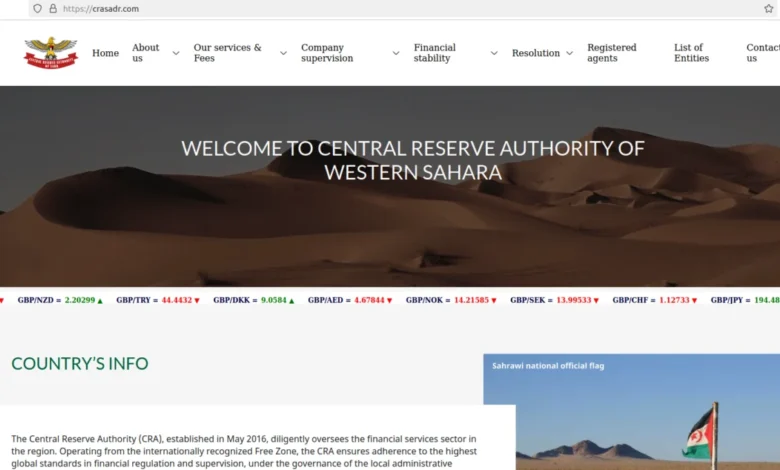
Most notably, the sole shareholder of Certa Payments was identified as a 25-year-old individual who also managed the "WS Management and Advisory Corporation." This corporation styled itself as a legitimate regulatory body responsible for licensing crypto and gaming businesses in the Western Sahara.

The website for this "regulatory body," crasadr.com, provided a veneer of legitimacy, listing entities that had been "awarded" licenses for currency exchange and online gambling. In reality, this was a self-serving loop: the entity overseeing the licenses shared servers and administrative data with the very companies it was supposedly regulating. This elaborate ruse allowed the platform to present itself to unsuspecting merchants and users as a licensed and "compliant" financial entity, further masking its true function as an illicit money-laundering hub.
Implications and Future Outlook
The U.K. sanctions act as a critical test for the international community’s resolve in policing the crypto-economy. By targeting the entire ecosystem—from the payment processors to the shell companies that provide their false regulatory credentials—the U.K. is signaling that the era of "regulatory arbitrage" is coming to an end.
The immediate aftermath of the sanctions was visible on the Telegram support bots used by the platforms, which reported sudden, unexplained failures in transaction processing on October 8. However, experts warn that the operators behind these entities are highly resilient and likely already preparing for the next iteration of their business.
The challenge moving forward for global regulators is to maintain this momentum. As these entities continue to evolve, the ability of Western nations to coordinate sanctions, share intelligence, and identify the underlying human operators behind the digital screens will be paramount. The Cryptomus case serves as a stark reminder that while the blockchain may be transparent, the actors who use it for illegal purposes are becoming increasingly adept at hiding behind layers of corporate, jurisdictional, and regulatory deception.
The effectiveness of this latest sanctions regime will ultimately be measured by its ability to force a permanent cessation of activity, rather than merely inducing another corporate rebranding. As the global economy becomes increasingly digitized, the standard for "financial compliance" is being forced to evolve, and the U.K.’s actions against Cryptomus set a high bar for what that compliance must look like in the years to come.